Inspiration
We Have A Number Of Sources Of Solutions Thant Should Prove Inspirational For You.
Inspiration
We Have A Number Of Sources Of Solutions Thant Should Prove Inspirational For You.
High quality standard and bespoke outdoor living products designed to create additional beautiful outdoor space protected from the often great, but extremely variable British weather.
By Product Type
Get In Touch
With Us Today
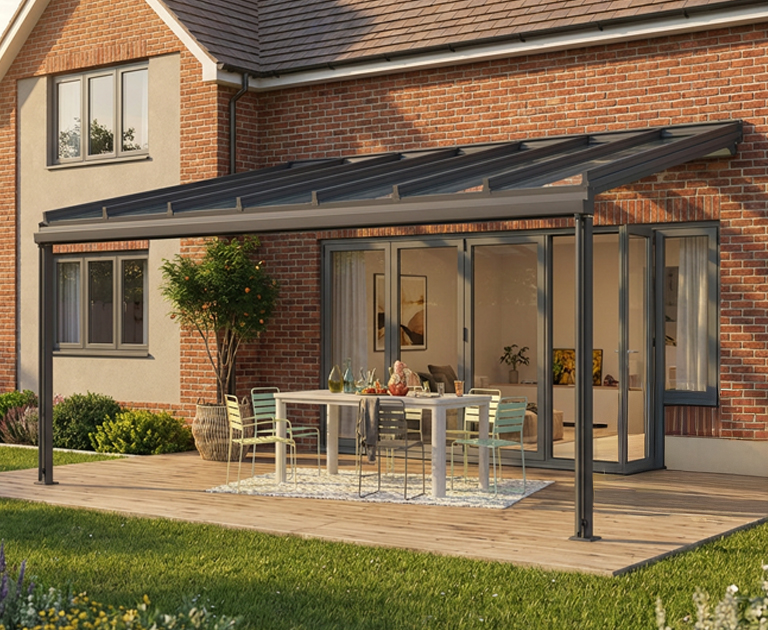
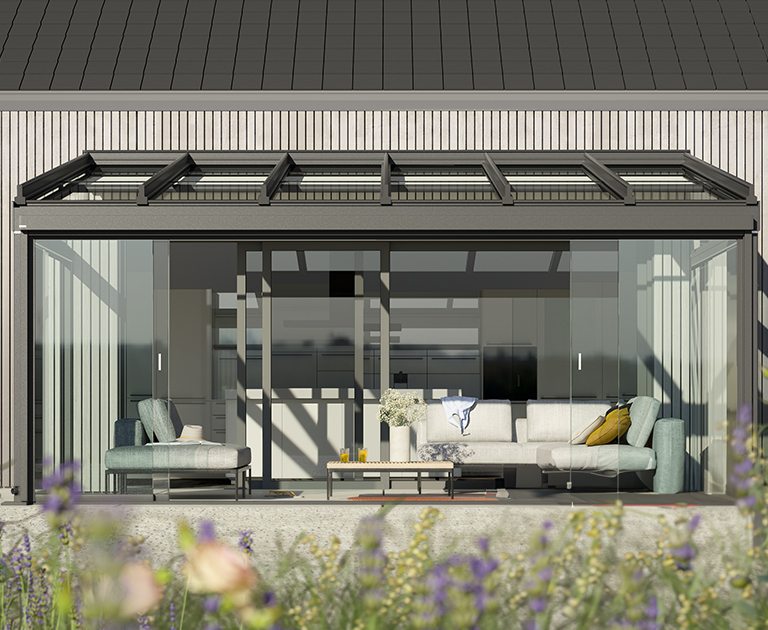
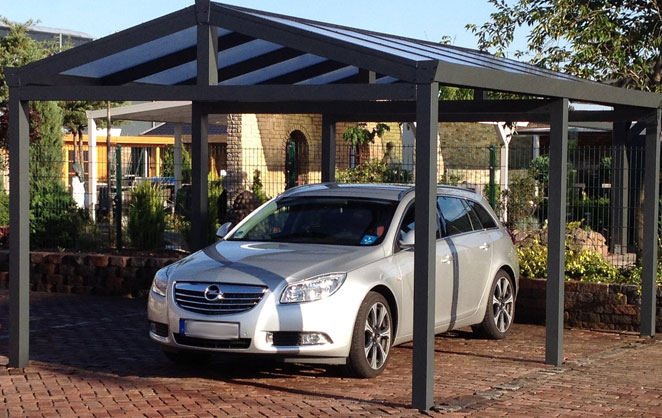
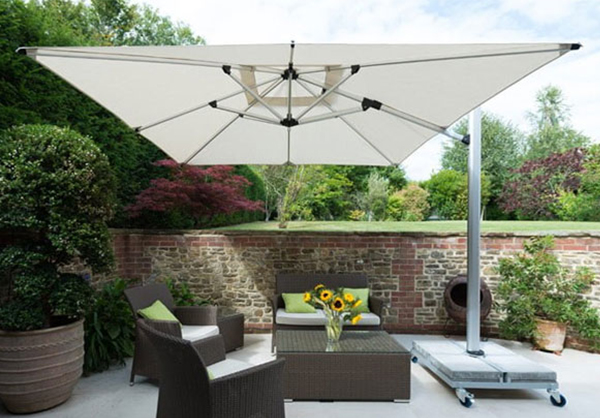
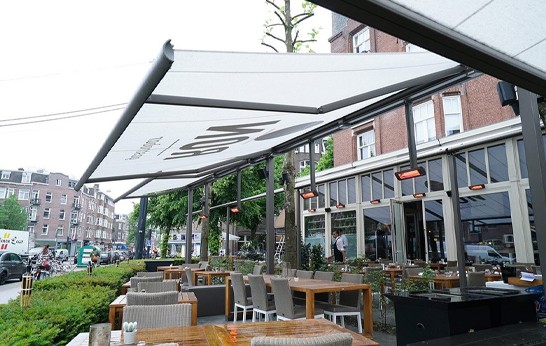
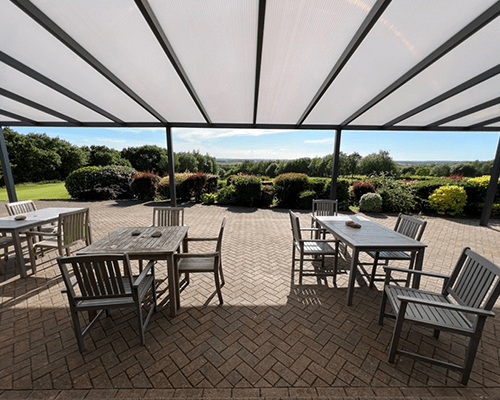
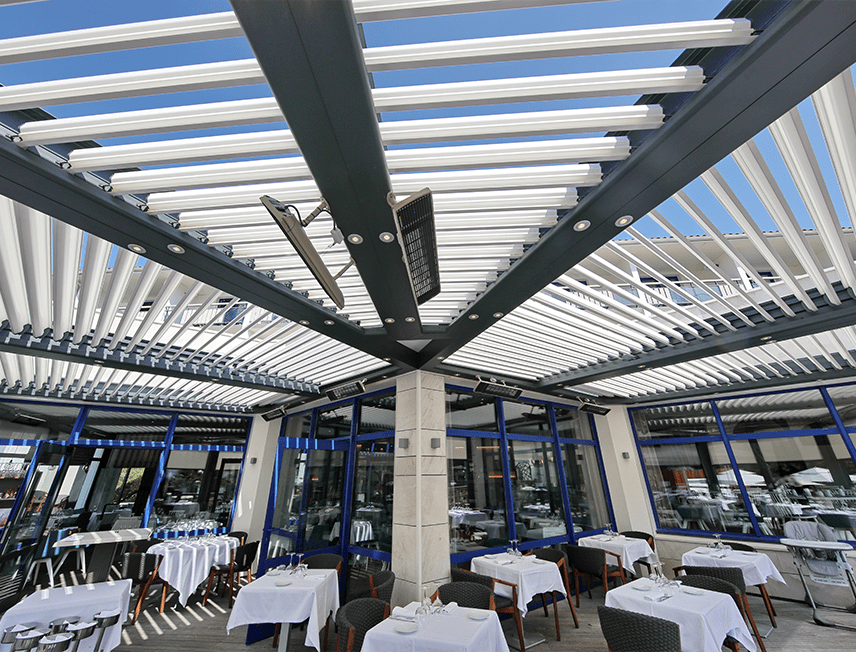
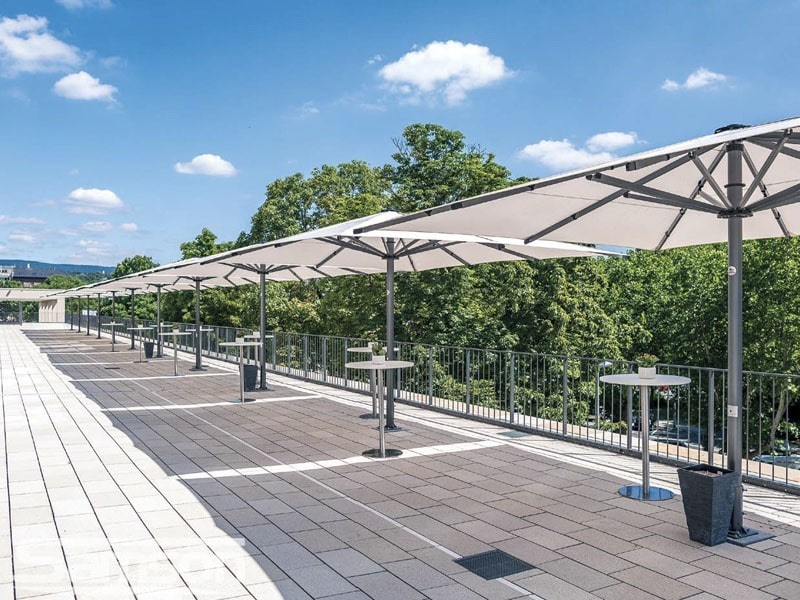
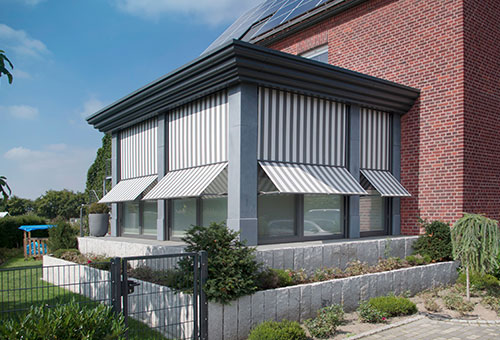
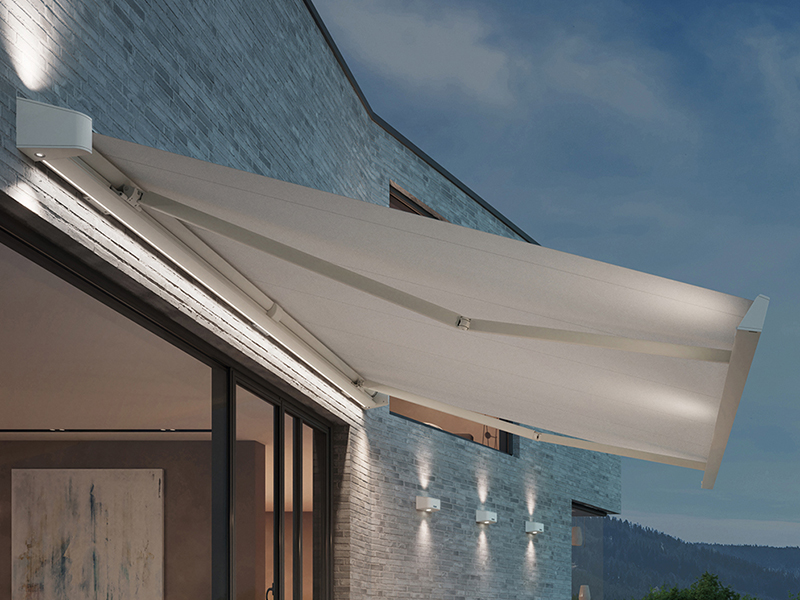
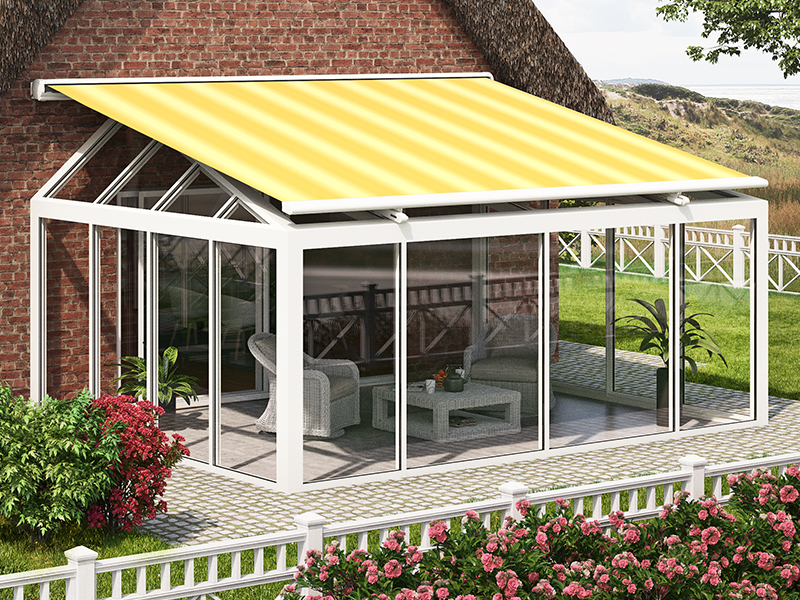
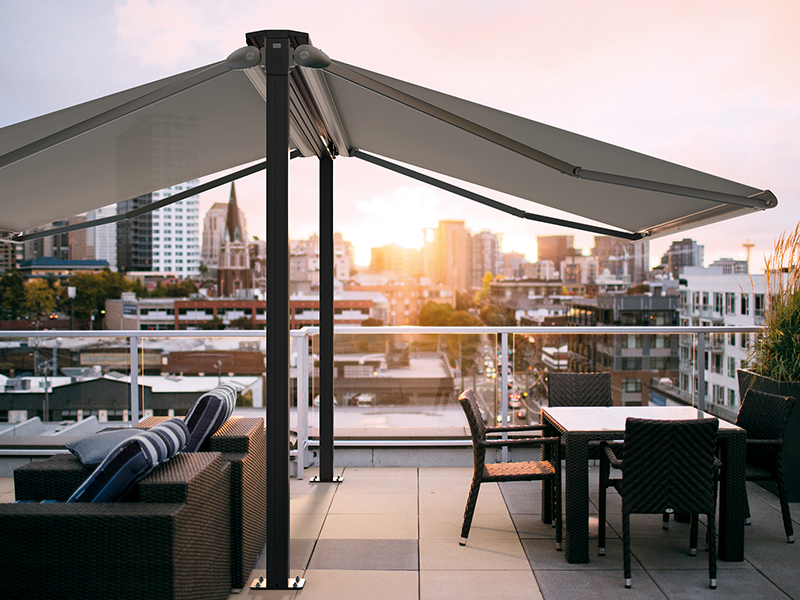
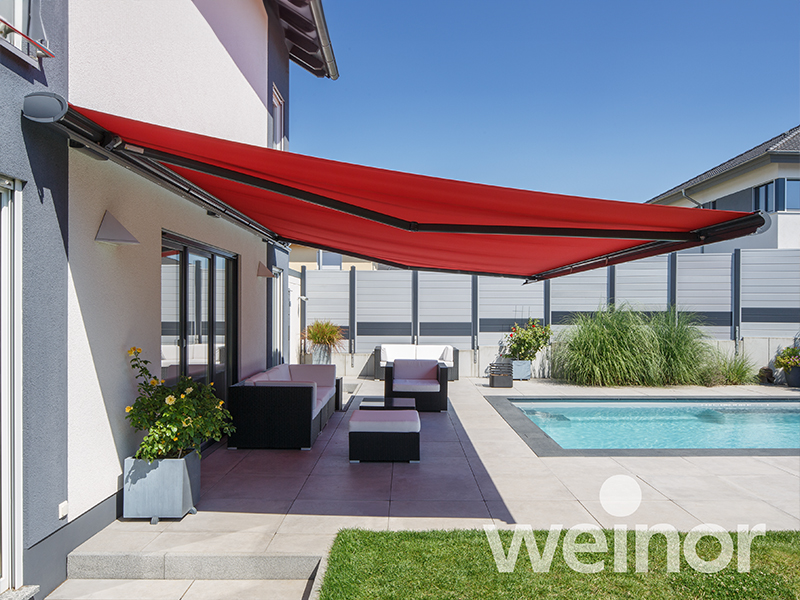
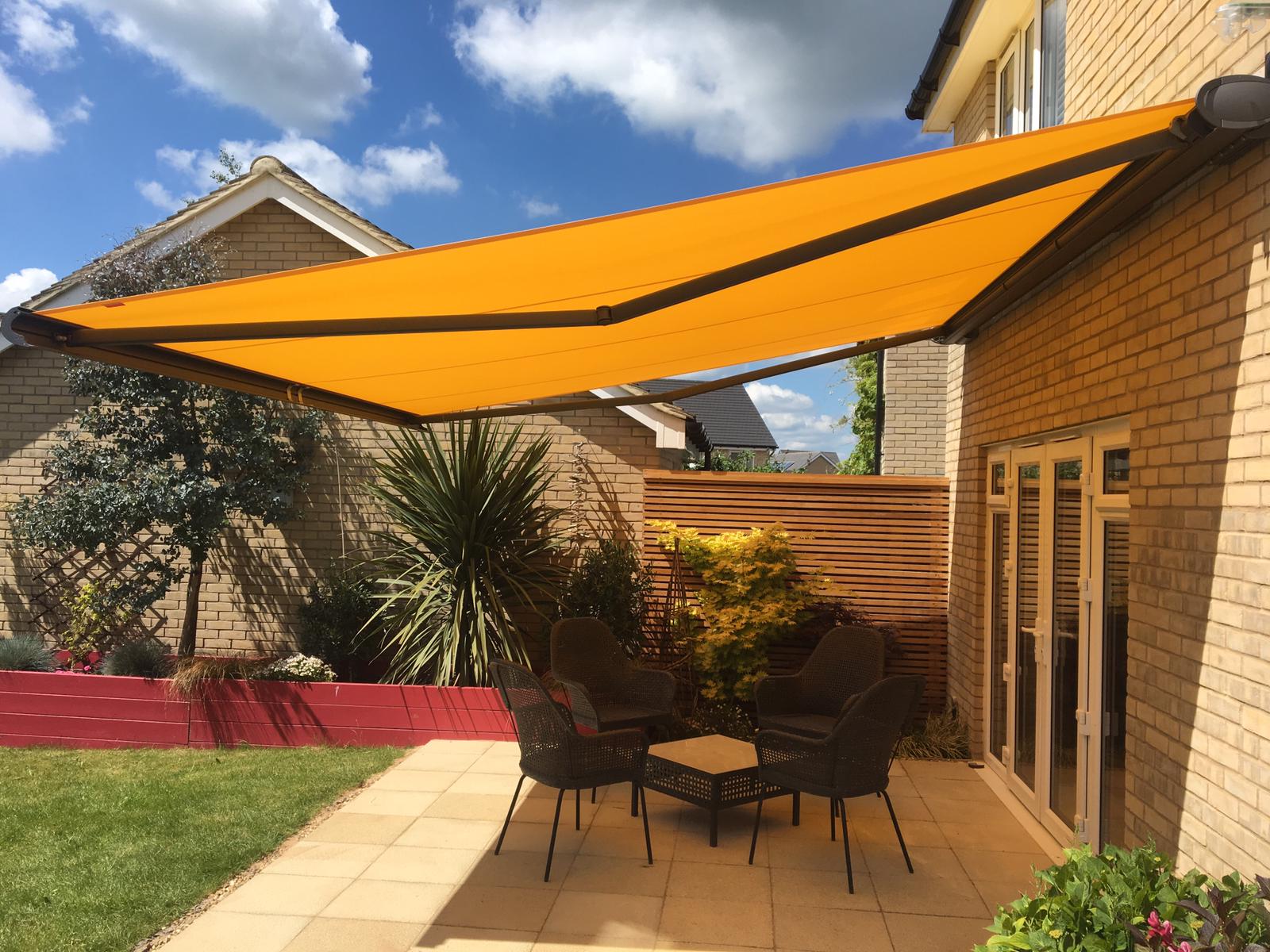
Samson Awnings offer a vast range of fixed or Retractable Awnings, commercial Retractable Canopies, Glassrooms, Parasols, External Vertical Blinds and Freestanding Structures to protect from the UK weather and extend the use of your outdoor space all year round.
By Product Type
Get In Touch
With Us Today
How retractable awnings, external vertical fabric blinds, and pergola systems deliver smarter, greener, and more cost-effective temperature control than air conditioning — and why every UK property owner needs to act now.
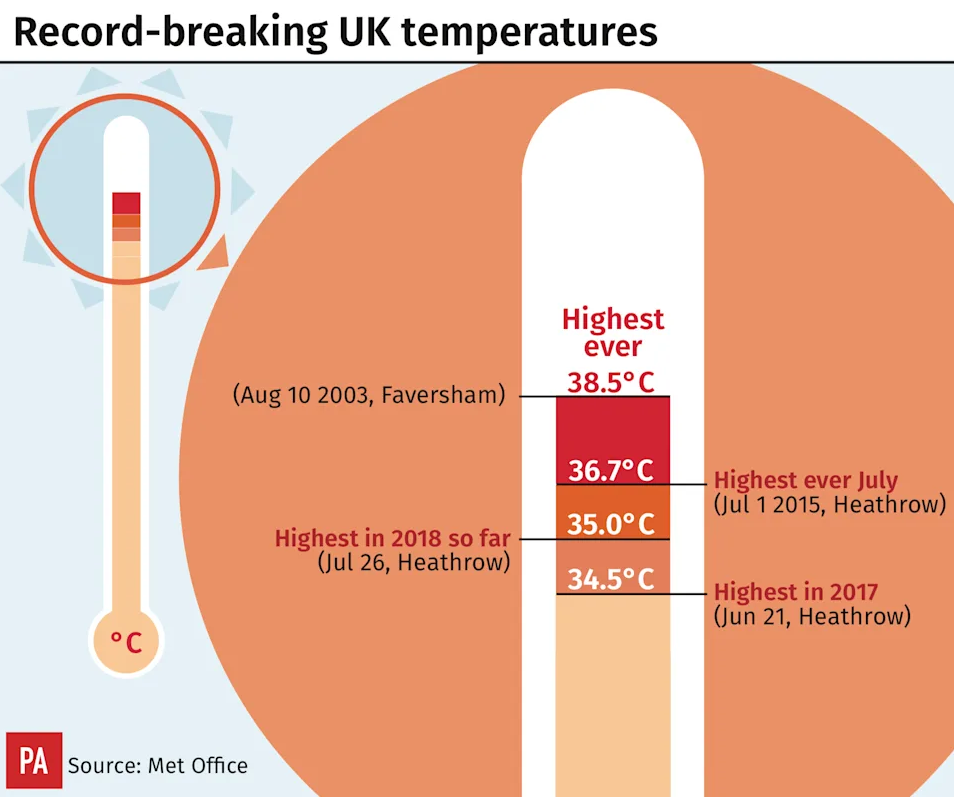
Britain is Overheating — and Our Buildings Are Making It Worse
Something has fundamentally changed about British summers. Not long ago, a week of temperatures above 25°C was a national novelty — a reason to buy ice cream, complain cheerfully, and wait for the rain to return. That era is over. Heatwaves that once arrived once a generation are now a recurring seasonal reality, and the consequences are no longer inconvenient. They are lethal.
In 2024 alone, England recorded 1,311 heat-related deaths. In summer 2025, that toll rose to an estimated 3,039 heat-associated deaths. Climate scientists at Imperial College London have confirmed that human-caused climate change nearly tripled the number of heat deaths during the June 2025 European heatwave, with fossil fuel-driven temperature increases of up to 4°C directly responsible for around 65% of estimated heat fatalities. The Met Office warns that by 2050, heatwaves like those of recent years will occur every other year as a matter of course.
The grim arithmetic of climate change is set in motion. But what happens inside our buildings is, to a very large degree, still within our control — and the solution is not the one most people reach for first.
The Air Conditioning Trap: Cooling That Makes the Problem Worse
When temperatures soar, the instinctive response is to switch on the air conditioning. It is immediate, it is powerful, and it is deeply, structurally wrong.
Air conditioning units work by extracting heat from inside a building and expelling it into the air outside. In doing so, every unit running in a city, street, or commercial district actively raises the outdoor temperature around it, intensifying the very heat island effect it was installed to escape. Urban areas already experience daytime temperatures 1–7°F higher than surrounding countryside, and a proliferation of air conditioning units compounds this warming feedback loop. Cool a room; heat the street. Heat the street; cool the room harder. The cycle drives up energy consumption, carbon emissions, and ambient temperatures simultaneously.
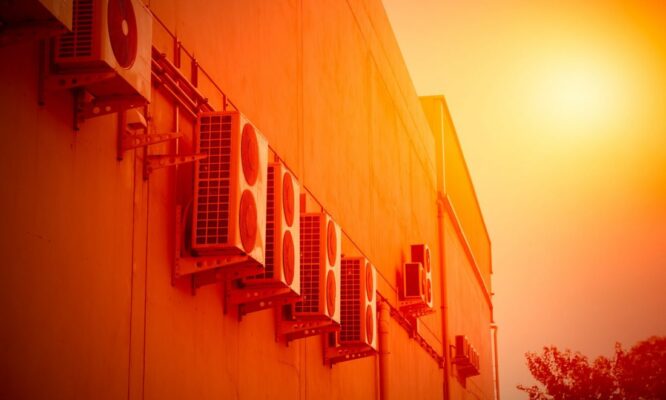
The energy bill consequences are severe, but the environmental cost is arguably greater. Air conditioning currently accounts for approximately 7% of the world’s electricity consumption — close to 20% of all electricity used in buildings globally. In the UK, the buildings sector already contributes significantly to national greenhouse gas emissions, and modelling of London office buildings has projected a five-fold increase in CO2 emissions from city-centre cooling by 2050 if current trajectories continue. The UK’s own net-zero commitments demand a 78% reduction in emissions by 2035 compared to 1990 levels. Running more air conditioning is not a path towards that goal — it is a direct obstacle to it.
There is a better way. A far more effective, dramatically cheaper, and genuinely sustainable way. And it begins not inside the building, but outside it.
The Fundamental Principle: Stop the Heat Before It Reaches the Glass
The critical distinction between external fabric shading and any internal solution — blinds, curtains, films — is one of physics, not preference.
When sunlight passes through a window, it transforms. Short-wave solar radiation transmits freely through glass, and once inside, it is re-radiated as long-wave infrared heat that cannot escape back through the pane. This is the greenhouse effect in miniature, and it happens whether your internal blinds are open or closed — because by the time the sun reaches your internal blind, it has already passed through the glass and deposited its thermal energy into the room.
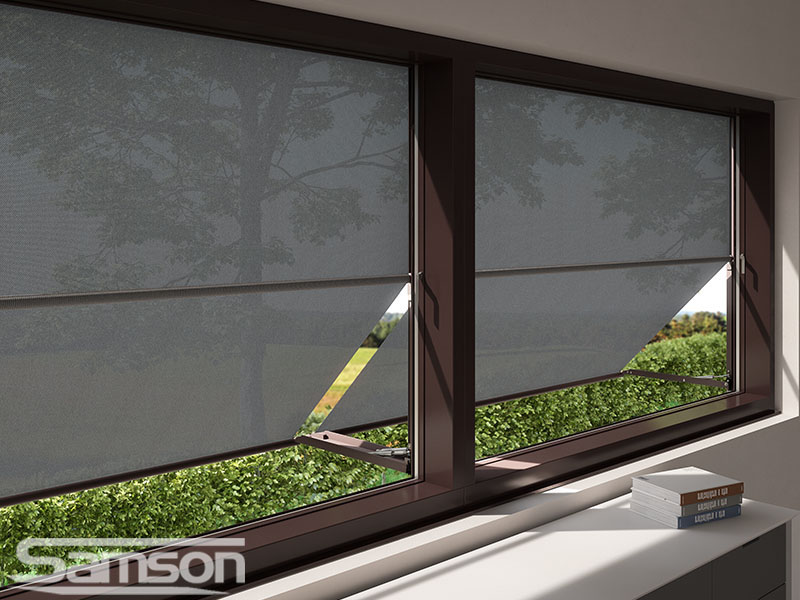
An external shading system changes this equation entirely. Placed outside the glazing, a quality fabric awning or vertical external blind intercepts and reflects or absorbs solar radiation before it ever reaches the glass surface. External blinds can block up to 97% of incoming solar radiation at source. The small fraction absorbed by darker fabric materials is re-radiated as long-wave infrared heat — a wavelength that cannot pass through glass — and dissipates harmlessly into the air gap between fabric and window. Heat that never enters a building does not need to be mechanically removed.
The British Blind & Shutter Association (BBSA) has demonstrated that properly specified external blinds can reduce internal room temperatures by up to 19.5°C — not just making a room cooler, but eliminating the need for active cooling altogether. When modern double low-emissivity glazing is combined with external blinds, less than 10% of incoming solar heat reaches the interior — a reduction of more than 900% compared to unshaded glazing. External blinds have also been shown to perform four times better than their interior counterparts in direct comparative testing.
External vs. Internal: The Numbers That Cannot Be Ignored
The comparison between external and internal shading is not a matter of marginal gains. It is a performance gulf.
Research cited by the BBSA using their Solar Shading Impact Report compared identical external and internal blinds using a 10% openness screen fabric under the same conditions:
| Shading Type | Heat Transmitted to Room | Solar Heat Blocked |
| No shading | ~100% | 0% |
| Internal blind | ~37% | ~63%[^11] |
| External blind | ~14% | ~86%[^11] |
| External blind (premium spec) | <10% | >90%[9][12] |
Building energy modelling by the National Energy Foundation, using EnergyPlus on a model office, quantified this gap in real operational terms:
| Shading Type | HVAC Energy Saving |
| Internal venetian blind | 10% |
| Internal screen roller blind | 23% |
| External venetian blind | 43% |
| External screen roller blind | 47% |
The message is unambiguous: external shading delivers between two and five times greater energy savings than internal shading, across every building type and configuration. The UK Green Building Council has noted that solar shading can reduce commercial building cooling costs by up to 60%. For existing UK housing stock — of which over 82% reported indoor overheating conditions by 2022, up from just 20% in 2011 — this is not a luxury upgrade. It is a structural necessity.
Why “Fabric First” is the Intelligent Strategy
The concept of a “fabric-first” approach to building thermal performance is well-established in sustainable design. It prioritises passive measures — reducing heat gain and heat loss through the building envelope itself — before reaching for active mechanical systems. External fabric shading is the definitive fabric-first solution for solar control.
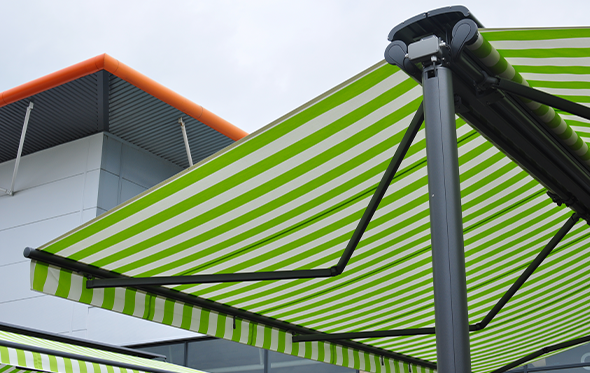
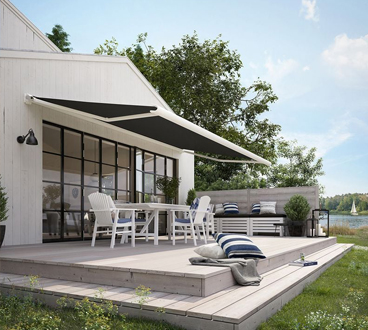
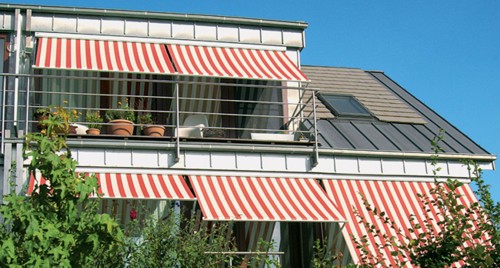
A retractable awning over a south-facing window or patio door reduces solar heat gain by up to 65% on south-facing elevations and 77% on west-facing elevations. These are the exact orientations that drive peak cooling loads in summer afternoons and evenings — the times when air conditioning is worked hardest and bills spike. Eliminating that solar input at source means air conditioning either becomes unnecessary or operates at a much higher setpoint temperature, reducing energy draw significantly. The Professional Awning Manufacturers Association energy study estimates potential cooling cost savings of between 15% and 50% through awning installation alone.
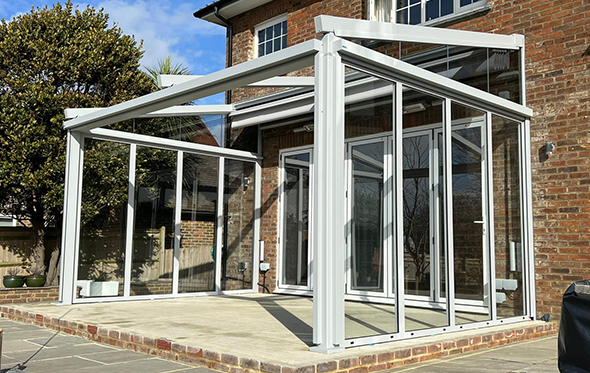
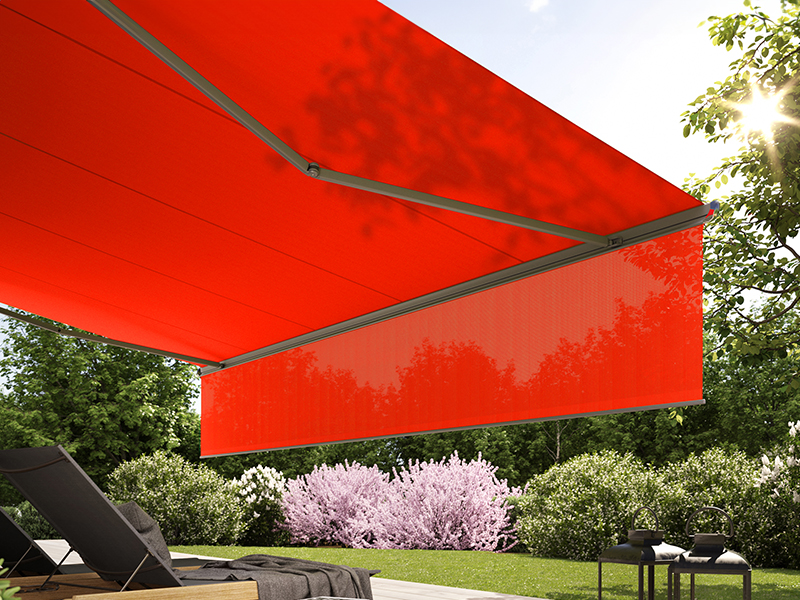
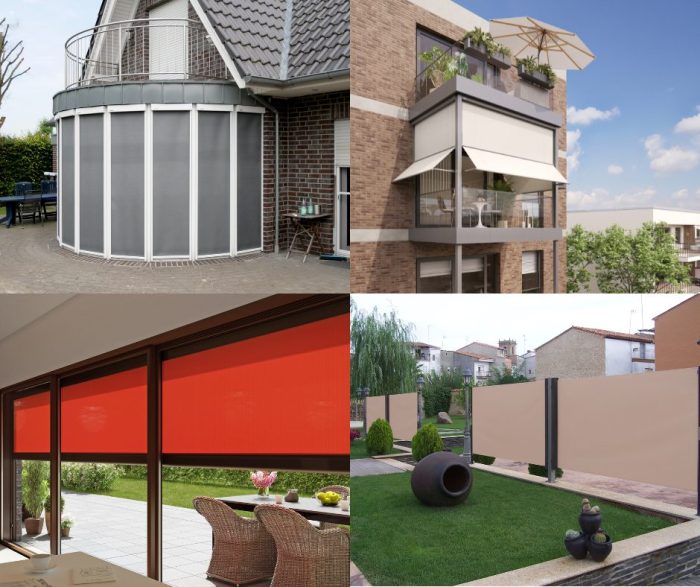
External vertical fabric blinds extend this principle to commercial facades, full-height glazing, doorways, and glazed extensions — precisely the configurations that create the most problematic solar gain. Unlike open window films or anti-reflective coatings, external vertical fabric blinds can be retracted when conditions change, giving occupants precise, dynamic control over thermal comfort throughout the day. On perforated or open-weave fabrics, vision and natural light are maintained even when blinds are fully deployed, preserving the connection to the outside without admitting its heat.
New buildings in England are now subject to Building Regulations Part O, which requires all new residential properties to pass overheating compliance checks. For high-risk locations, external shading is mandated as a primary mitigation strategy — and critically, neither internal blinds nor foliage count towards compliance calculations. The regulatory framework has already recognised what the evidence shows: external shading is the only reliable passive solution.
Pergola Systems and Outdoor Shading: Extending the Protected Zone
The benefits of fabric shading extend beyond the building envelope itself. Unshaded outdoor spaces adjacent to buildings — patios, terraces, hospitality areas, south-facing gardens — absorb and re-radiate solar heat throughout the day, raising the thermal load on adjacent internal spaces and making outdoor living uncomfortable for the majority of daylight hours in summer.
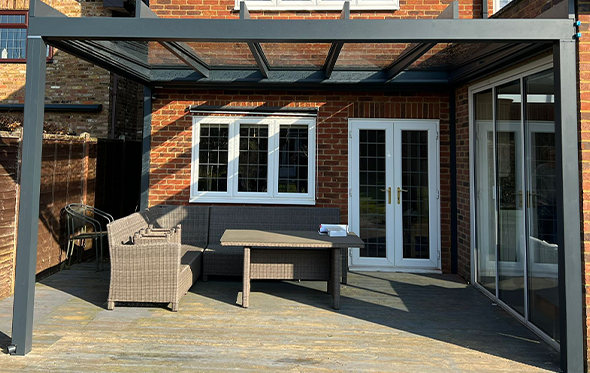
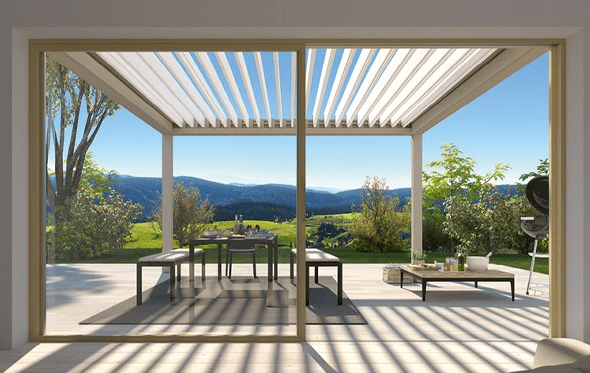
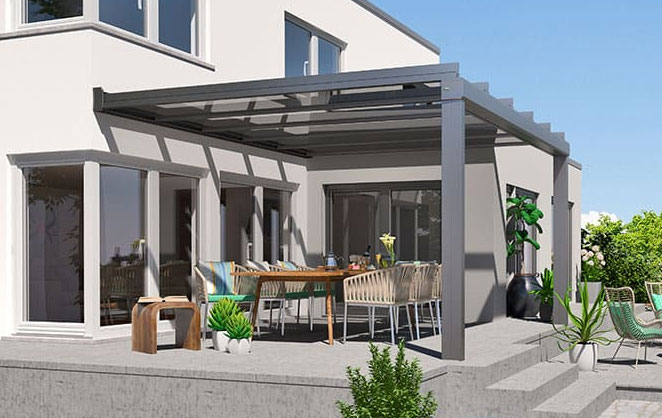
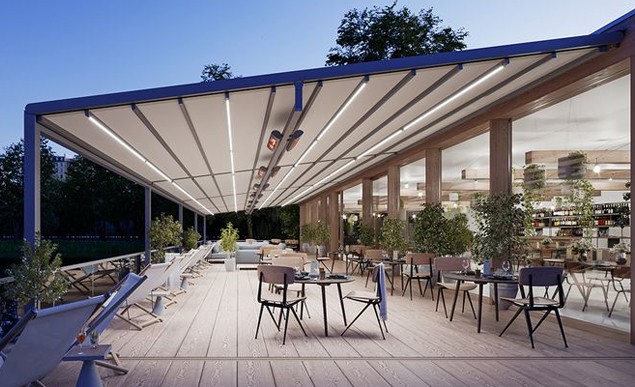
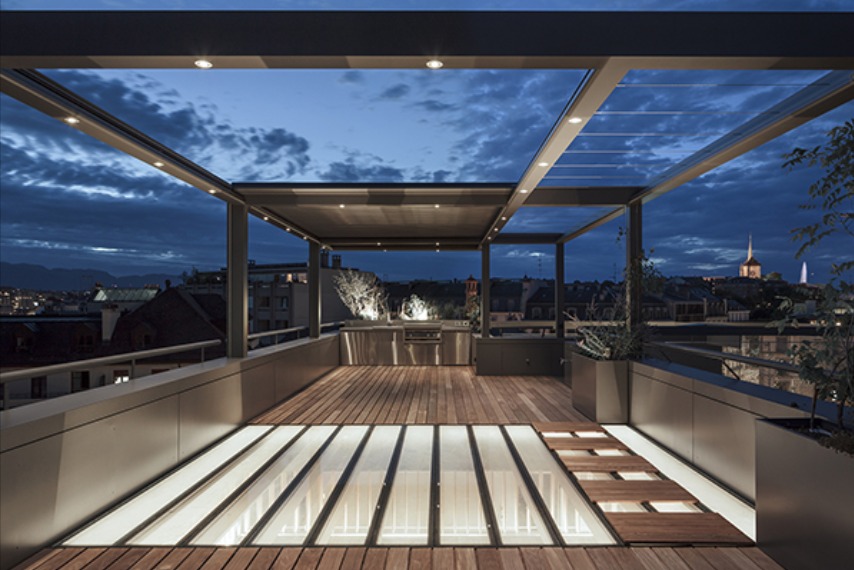
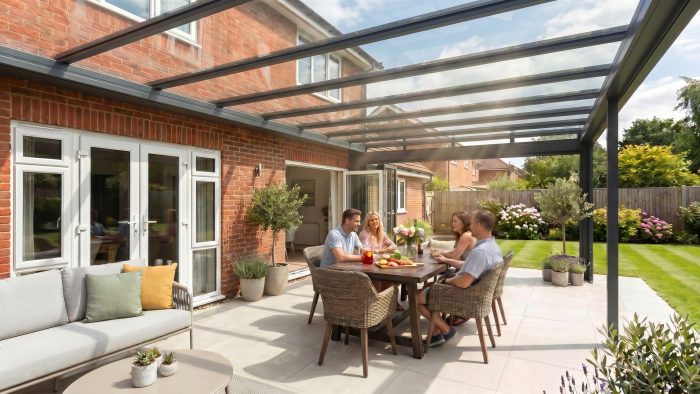
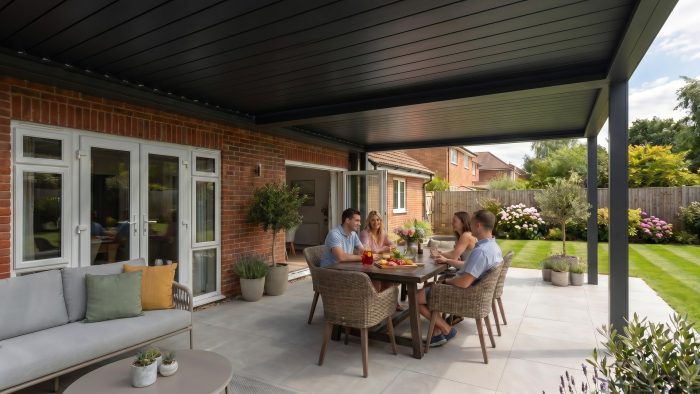
A properly specified pergola system with a fabric or louvred roof addresses this directly. Commercial-grade louvred pergolas can extend the usable season of an outdoor space from approximately 120–150 days per year to 280–320 days — more than doubling commercial operational capacity for hospitality businesses and dramatically improving year-round quality of life for residential properties. The structural frames of quality aluminium pergola systems carry lifespans of 25–30 years, making them long-term property investments rather than short-term weather solutions.
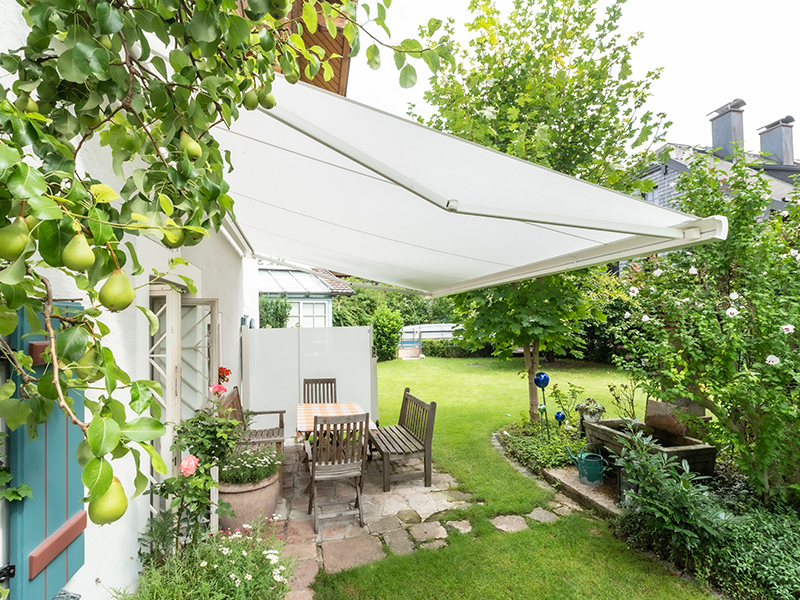
For residential properties, the combination of a retractable awning over doors and principal windows, supplemented by a pergola or canopy over the outdoor living area, creates a comprehensive thermal buffer zone. Solar radiation is intercepted before it reaches glazed surfaces. Outdoor areas remain usable in hot weather. The interior temperature is stabilised by passive means. The air conditioning either stays off, or is run for significantly shorter periods at lower intensity.
The Long-Term Investment Case
Critics of external shading often cite upfront cost as a barrier. The argument is considerably less convincing when placed alongside the real cost of the alternatives.
A domestic air conditioning unit costs between £1,500 and £4,000 to install, consumes significant electricity throughout the cooling season, requires annual servicing, and contributes directly to the urban heat island effect that makes further air conditioning increasingly necessary. It is a solution that perpetuates the problem it purports to solve.
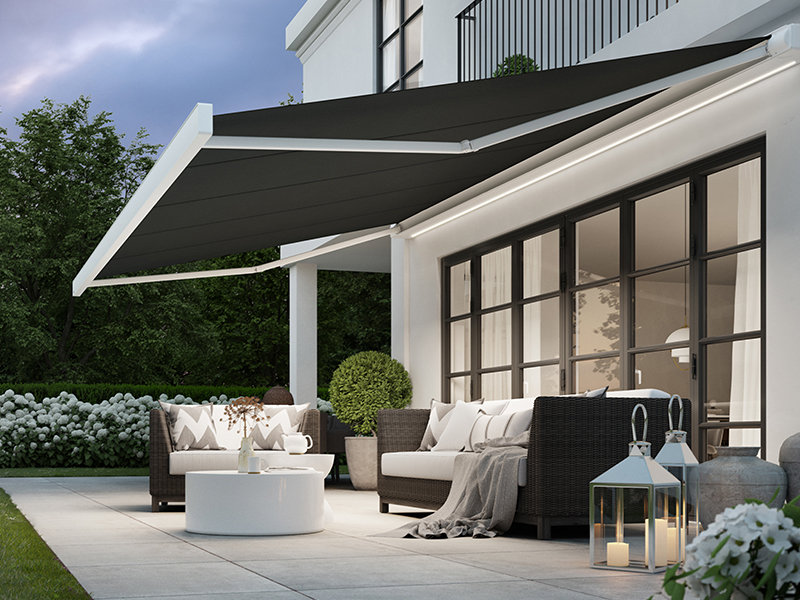
A quality retractable cassette awning, properly specified and professionally installed, costs a fraction of that over its operational life, consumes zero energy in use, reduces cooling loads passively, and protects interior furnishings from UV degradation. High-quality solution-dyed acrylic awning fabrics last 10 to 15 years with normal care, while the powder-coated aluminium frames that support them are engineered to last 20 to 30 years or more. A retractable awning installed today will still be performing on the hottest day of 2040.
External vertical fabric blind systems offer comparable longevity and, when fitted with tracked side-guide systems, provide additional protection from wind and rain that widens their functional season considerably. Commercial installations of façade shading routinely achieve full return on investment through reduced HVAC operating costs within five years.
The UK’s own building energy regulations increasingly reflect this calculus. External shading is recognised under TM59 dynamic thermal modelling as a credible passive mitigation measure. Assessors, architects, and specifiers working on both new builds and refurbishment projects are converging on a clear conclusion: external fabric shading is the most cost-effective, technically superior, and environmentally responsible route to thermal comfort.
The Environmental Argument: No Exhaust, No Emission, No Compromise
It is worth stating plainly what external fabric shading does not do.
It does not burn energy. It does not pump refrigerant. It does not expel heat from one space into another. It does not heat the street outside your building. It does not contribute to the greenhouse gas emissions accelerating the warming that makes shading necessary in the first place.
An awning, a pergola, a vertical fabric blind — these are passive systems operating on the most straightforward physical principle imaginable: block the sun before it becomes a problem. They represent the built environment’s equivalent of sunscreen — applied at the surface, intercepting the radiation, preventing the harm — rather than the equivalent of treating sunburn after the damage is done.
The urgency of the UK’s overheating challenge is not going to ease. The proportion of UK homes overheating surged from 20% to 82% in just over a decade. Climate projections indicate that the number of days exceeding 25°C in the UK could rise from around 10 per year currently to 37 days per year under a 4°C warming scenario. Heat-related deaths — already running at over 3,000 annually in England — are projected to triple to 7,000 per year by the 2050s. More than half of low-income families in the UK live in properties particularly prone to dangerous indoor temperatures.
External shading cannot solve all of this. But it is the single most effective passive intervention available to property owners right now — applicable to any building, at any age, on any budget, without planning permission in most cases.
What Good Specification Looks Like
Not all shading is equal. The effectiveness of external shading depends on correct specification for orientation, building type, and usage pattern.
For domestic properties:
For commercial properties:
Fabric selection:
The Moment to Act Is Now
The UK is at an inflection point in its relationship with heat. The comfortable assumption that British summers are inherently temperate — that overheating is someone else’s problem, a Mediterranean concern, a future worry — has been comprehensively dismantled by the evidence of recent years. The question is no longer whether the UK will experience dangerous summer heat. It is whether our buildings are equipped to manage it.
Air conditioning is not the answer. It is expensive to run, harmful to the environment, and — because it releases heat into the atmosphere outside — part of the very cycle that drives the overheating it is supposed to address. It treats the symptom while worsening the cause.
External fabric shading — retractable awnings over windows and doors, external vertical fabric blinds on glazed façades, pergola systems over outdoor areas — stops the problem at source. It costs nothing to run. It contributes nothing to emissions. It lasts for decades. And according to the best available scientific evidence, it is between four and ten times more effective at controlling solar heat gain than any interior solution.
Britain’s homes, offices, schools, care homes, and commercial properties deserve better than the false economy of running air conditioning against a summer that is only going to get hotter. The technology to respond intelligently and sustainably already exists — stretched across the exterior of buildings, intercepting the sun before it becomes a crisis.
The only question is whether we choose to use it.
For information on retractable awnings, external vertical fabric blinds, pergola systems, and commercial solar shading solutions, contact a BBSA-registered specialist who can survey your property and recommend a correctly specified external shading solution.
Contact us to arrange a showroom visit, or send an image and measurements for a tailored quotation, all backed by our decades of expertise and commitment to quality.