Inspiration
We Have A Number Of Sources Of Solutions Thant Should Prove Inspirational For You.
Inspiration
We Have A Number Of Sources Of Solutions Thant Should Prove Inspirational For You.
High quality standard and bespoke outdoor living products designed to create additional beautiful outdoor space protected from the often great, but extremely variable British weather.
By Product Type
Get In Touch
With Us Today
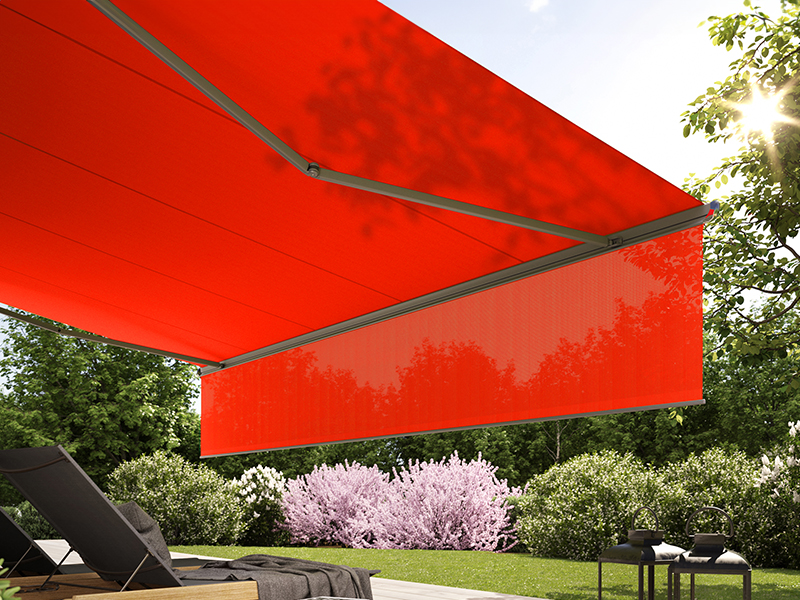
Samson Awnings offer a vast range of fixed or Retractable Awnings, commercial Retractable Canopies, Glassrooms, Parasols, External Vertical Blinds and Freestanding Structures to protect from the UK weather and extend the use of your outdoor space all year round.
By Product Type
Get In Touch
With Us Today
Yes, your awning should always be retracted in strong winds, but what actually counts as “strong”?
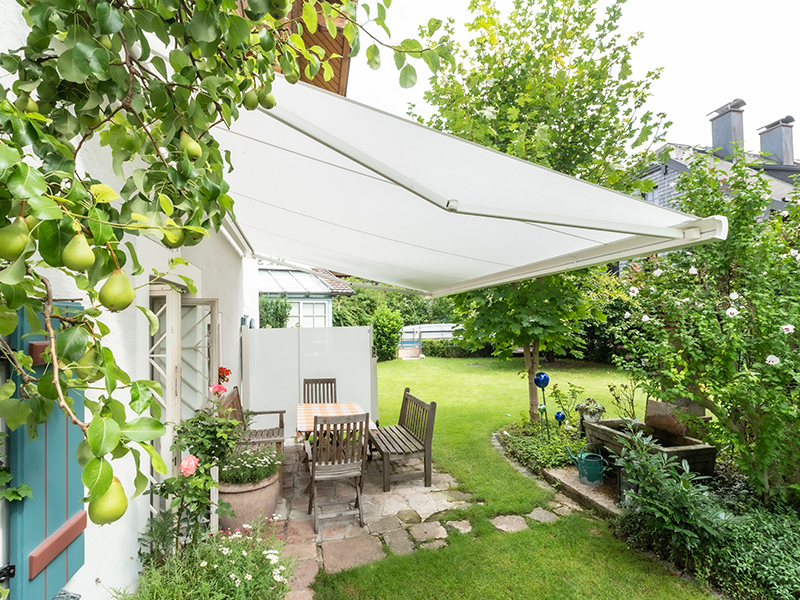
Most high quality retractable awnings supplied by Samson Awnings, including Markilux, Lewens and Weinor systems, are rated to Wind Class 2 (Beaufort Force 5). This equates to wind speeds of approximately 17–23 mph, assuming the awning is correctly installed onto a suitable structure.
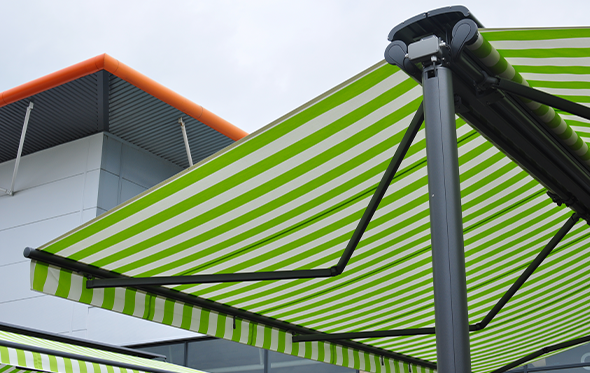
A simple visual guide is often the best indicator: if the front bar of the awning begins to bounce or move excessively, the wind load is too high and the awning should be retracted.
Modern awnings can be fitted with automated safety features to reduce risk and improve convenience. These include remote control operation and wind sensors.
These systems are particularly useful if the awning is left unattended, as they can close the awning before damage occurs.
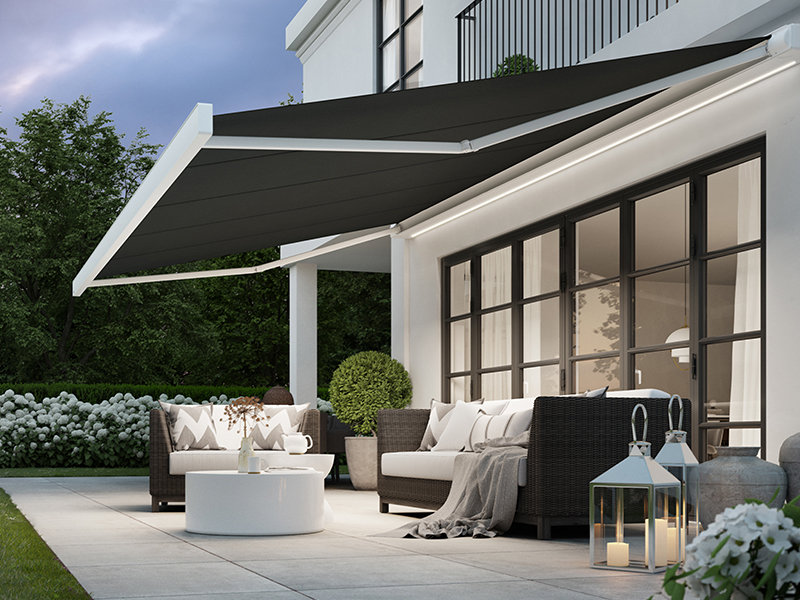
As a general rule, wider awnings (typically over 4 metres) are more affected by wind and should ideally be motorised with wind protection in place. The quality of installation and fixings also plays a major role in how well an awning performs in windy conditions.
If your property is in a more exposed area, it may be worth considering a more robust system rather than a standard folding arm awning.
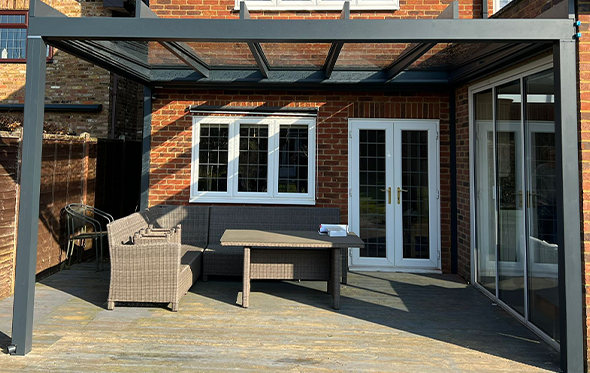
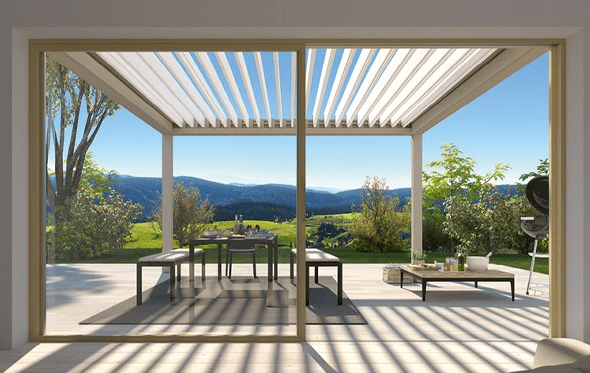
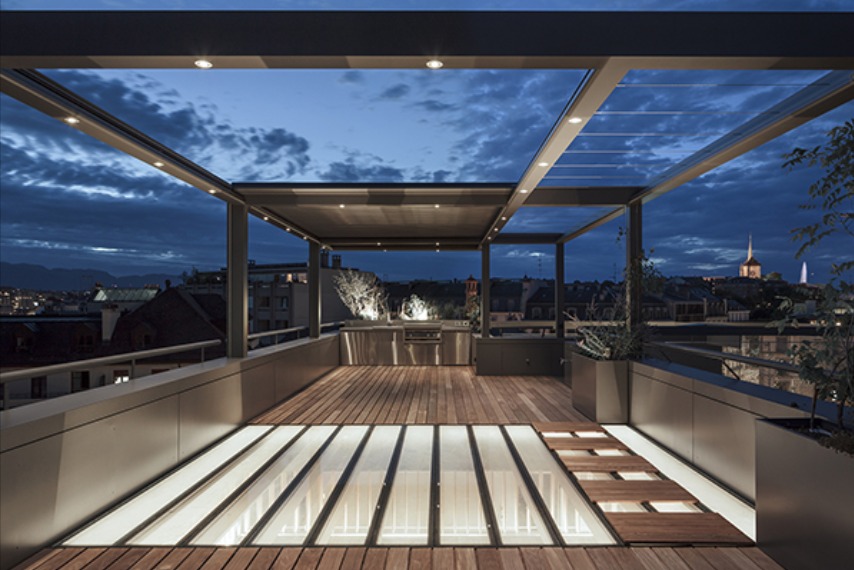
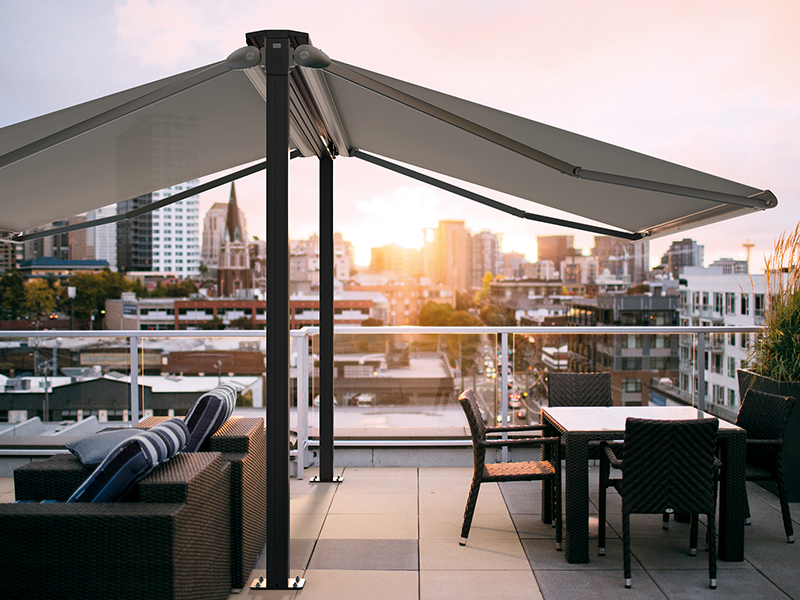
Supported pergola-style awnings, such as the Markilux Pergola range or Weinor Plaza models, include front support posts. This added structure makes them more stable in wind and also better suited to handling light rain. They can also achieve greater projections, giving you more usable covered space.
For even greater resistance, systems like the Weinor Pergotex or Markilux Pergola Stretch use tensioned or reinforced fabric designs. These are specifically engineered to cope with more challenging weather conditions.
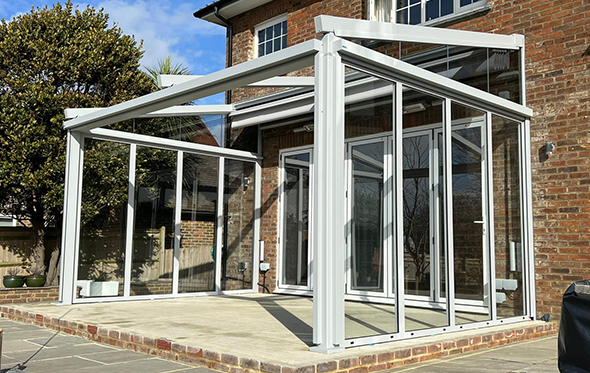
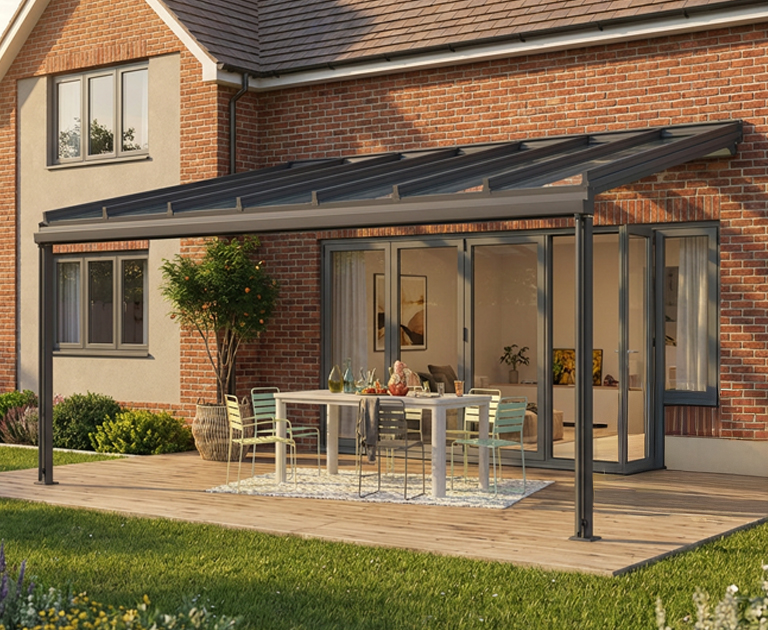
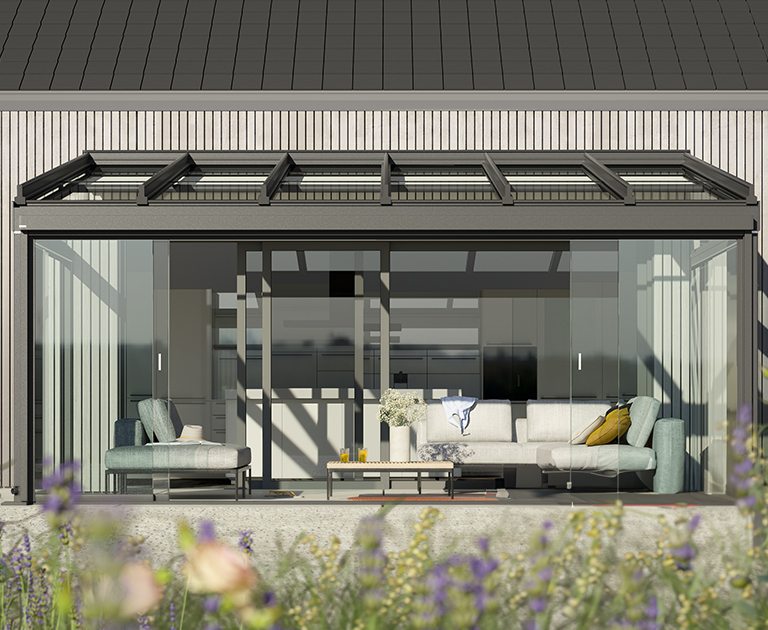
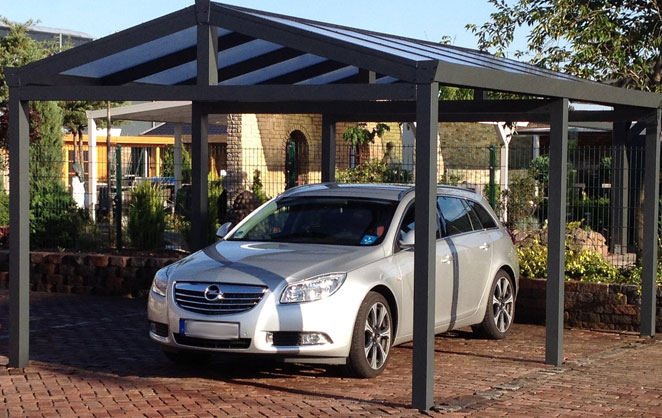
If you want maximum reliability in all weather conditions, a fixed roof system such as a veranda or canopy is often the best long-term solution. These are designed with structural ratings for wind, rain, and in some cases snow, making them far more resilient than retractable options.
In short, while modern awnings are built to handle moderate wind, taking a cautious approach will help protect your investment and extend its lifespan.